You're training for the wrong decade

Dr. Peter Attia has spent decades studying a single question.
Not how to look better.
Not how to perform better in the next 5 years.
How to remain physically capable, cognitively sharp, and metabolically healthy in the last decade of your life — when it is hardest to intervene and matters most.
His 8 rules are the answer to that question.
The fitness industry spent millions making you believe optimal health requires complexity.
Eight rules.
Zero magic.
Zero excuses.
But there is not much money in telling you that.
DR. PETER ATTIA’S 8 RULES — REORDERED BY WHAT ACTUALLY MATTERS MOST
Starting with the destination. Ending with the most underestimated habit on the list.
1 — Train for your final decade, not your next photoshoot
Start here — because this reframes every other rule on this list.
Attia calls it the Centenarian Decathlon.
Not a race. A concept.
The idea: identify the 10 physical tasks you want to be able to perform at 80 — climbing stairs, getting up from the floor without assistance, carrying your own groceries, playing with your grandchildren, moving without fear of falling.
Then train backward from those tasks today.
This reframes the entire purpose of exercise.
You are not training for aesthetics.
You are not training for performance metrics.
You are training to preserve the physical capacity that determines whether your final decade is one of independence and vitality — or one of managed decline.
The practical implication: the exercise that serves this goal is not the same exercise most people do.
It prioritises functional strength over isolation exercises.
Stability over explosive power.
Aerobic capacity over sprint performance.
Walk more. Zone 2. Resistance training. VO2 max work.
In that combination — applied consistently over years — your 80-year-old body retains the capacity most people assume is inevitable to lose.
Research suggests physical function in later life is more strongly predicted by lifetime exercise habits than any other single modifiable variable. Verify the study → pubmed.ncbi.nlm.nih.gov/31337884
2 — Train for your brain as seriously as your body
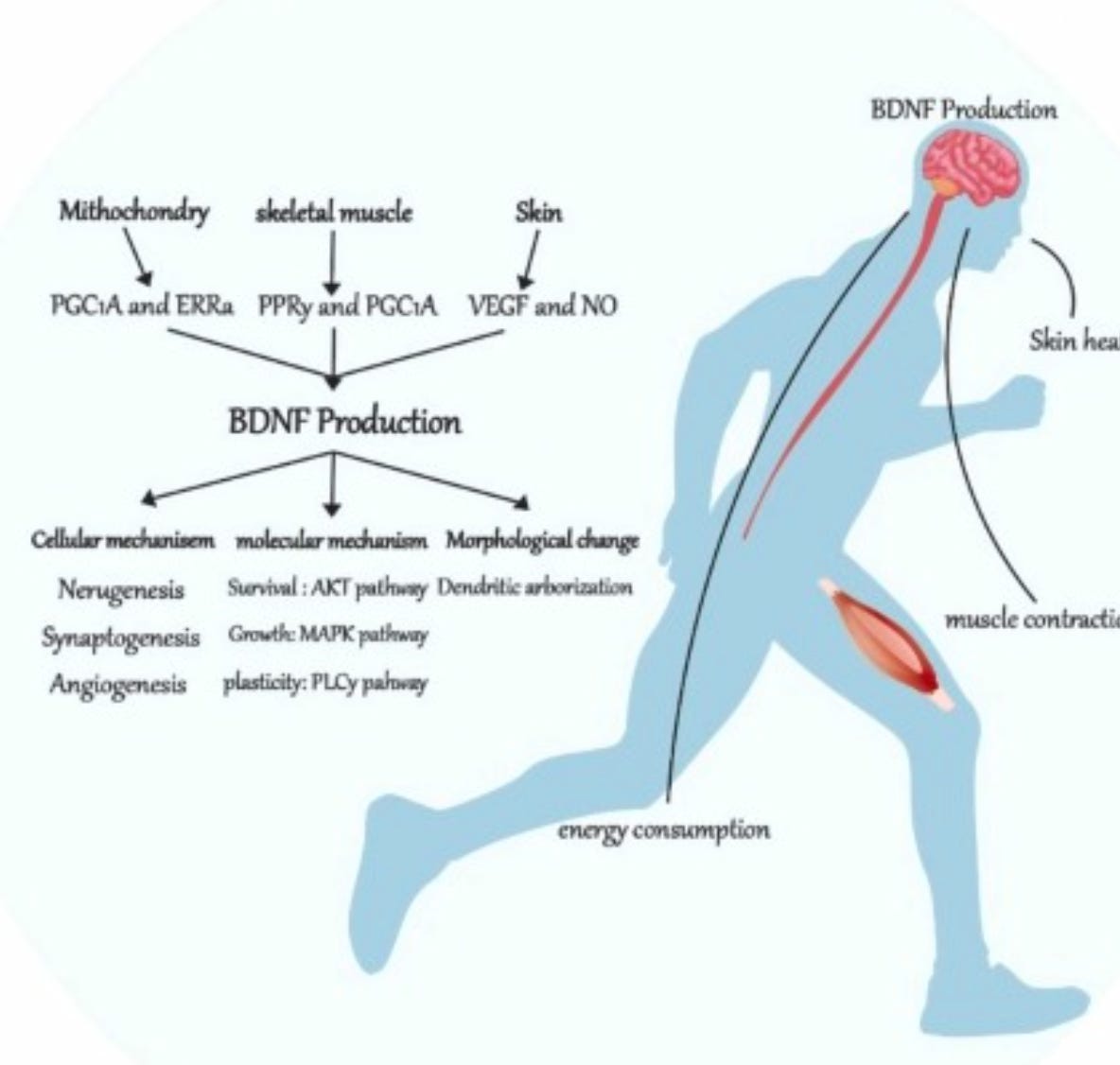
This is the rule most fitness conversations skip entirely.
Exercise is the most powerful intervention available for brain health — more consistently supported by the research literature than any pharmaceutical, any supplement, and any dietary intervention for cognitive function.
The mechanism: exercise triggers the release of BDNF — brain-derived neurotrophic factor — the protein that stimulates the growth of new neurons and strengthens existing neural connections.
What this produces measurably:
→ Reduced anxiety — exercise is as effective as medication for mild-to-moderate anxiety in multiple clinical trials
→ Reduced chronic stress — through cortisol regulation and vagal tone improvement → Elevated mood — through endorphin, serotonin, and dopamine pathway activation → Improved memory and learning — BDNF directly supports hippocampal neurogenesis
→ Slowed cognitive decline — the most consistent finding across longevity research
For adults over 50 — where the first signs of cognitive slowing are often attributed to “just aging” — the research is unambiguous.
Cognitive decline is not inevitable.
It is, in large part, a movement deficit.
The body and the brain run on the same engine.
Train the engine — and both benefit.
3 — Fix your sleep before fixing anything else
If there is one rule on this list that determines whether all the others work — it is this one.
Sleep is not recovery from training.
Sleep is when training produces its results.
Every adaptation — muscle growth, cardiovascular improvement, metabolic recalibration, hormonal restoration — occurs during sleep.
Without sufficient, quality sleep:
→ Hunger hormones dysregulate — ghrelin elevates, leptin drops — producing the food cravings that undermine every nutritional effort
→ Cortisol stays elevated — driving visceral fat storage regardless of caloric intake
→ Testosterone drops measurably after even one week of 5-hour nights
→ Recovery from exercise is incomplete — the training stimulus accumulates as accumulated damage rather than adaptation
→ Impulse control deteriorates — making every other healthy behaviour harder to maintain
Attia’s position is direct: not sleeping enough does not make you stronger.
It makes you easier to break.
Seven hours minimum.
Consistent sleep and wake time every day — including weekends.
No screens generating cortisol before bed.
These are not suggestions.
They are the biological prerequisites for every other rule on this list to function.
Research suggests sleep restriction to 5–6 hours per night produces hormonal, metabolic, and cognitive deterioration equivalent to complete sleep deprivation within 10 days.
4 — Your nutrition structure matters as much as your food choices
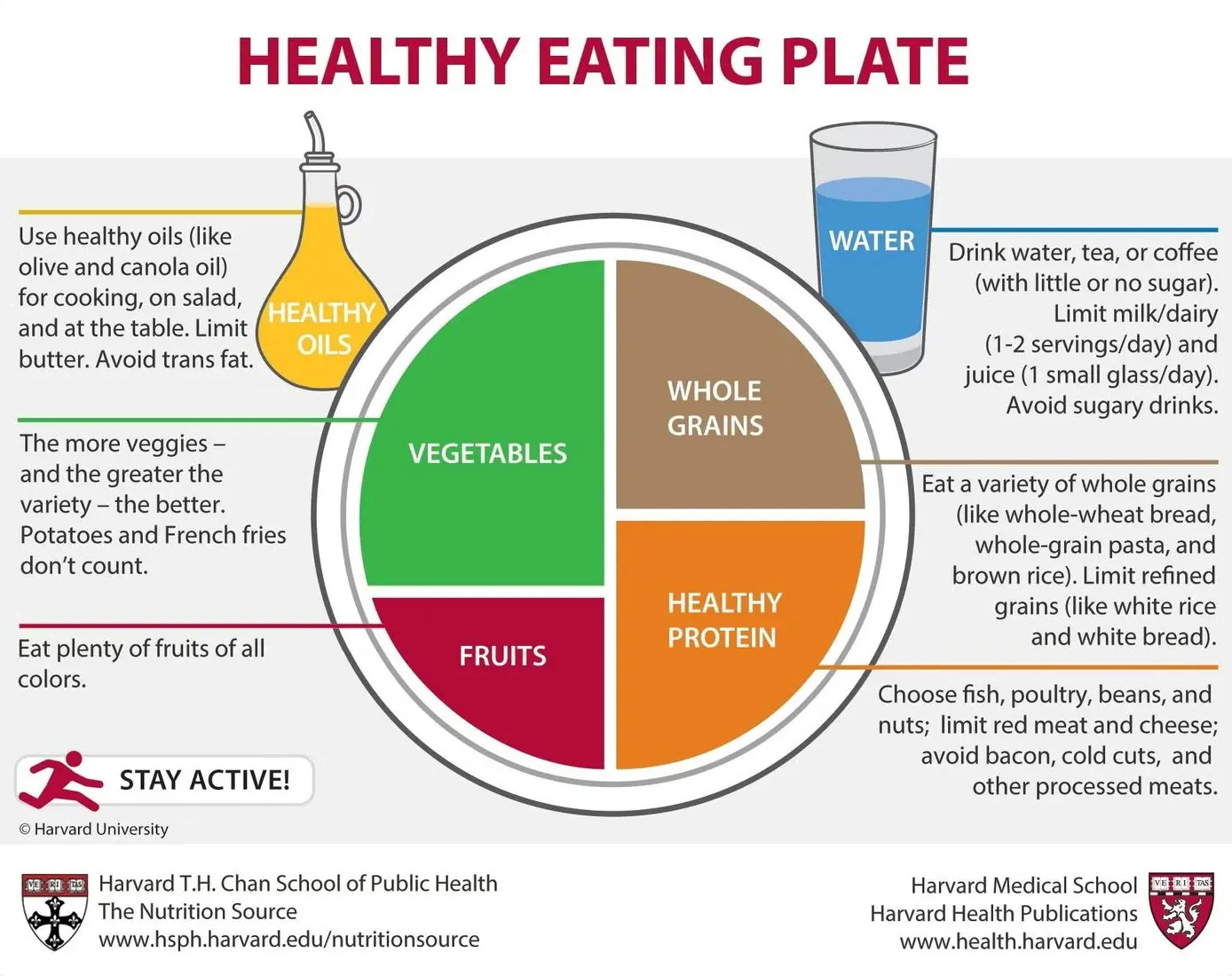
Attia’s nutritional rule is not a diet.
It is a structure — and the structure is what most people are missing.
Four specific principles:
→ Protein at every meal — prioritised, not optional Adequate protein is the single most important nutritional variable for muscle maintenance after 50. Most people eat insufficient protein at breakfast and lunch — compensating inadequately at dinner. Distributing protein across all three meals produces significantly better muscle protein synthesis than the same total amount consumed primarily at one meal.
→ Controlled portions without obsessive tracking Not counting calories. Understanding relative quantities. A palm of protein. A fist of vegetables. A thumb of fat. Simple anchors that prevent the unconscious overconsumption that characterises most adults’ eating patterns.
→ Avoid anxiety-driven snacking Most snacking after 50 is cortisol-driven — not hunger-driven. The blood sugar crashes that produce snacking urges are almost always the result of inadequate protein and fat at the previous meal. Fix the meal — and the snacking urge diminishes without willpower.
→ Don’t ruin the weekend The most consistent predictor of failed health goals is not what happens Monday through Friday. It is the accumulated caloric and inflammatory load of Friday evening through Sunday that systematically undoes the week’s progress. Weekends are not exempt from the structure.
Eating without structure ages you faster than training inconsistently.
5 — Lift weights. Cardio alone is one of the worst traps in fitness.
“I’ll do cardio to lose weight.”
This is one of the most repeated pieces of fitness advice — and one of the most inadequate responses to what actually happens to the body after 50.
Cardio burns calories during exercise.
Resistance training rebuilds the metabolic infrastructure that determines how many calories your body burns at rest — every hour, every day, indefinitely.
Muscle is your primary metabolic organ.
It is where glucose is stored before it becomes visceral fat.
It regulates insulin sensitivity more than any dietary intervention.
It produces myokines — anti-inflammatory compounds released during contraction that reduce systemic inflammation and protect the brain.
It maintains the joint stability and bone density that prevent the falls and fractures that represent the most significant physical health events for adults over 70.
Attia’s position: the person who maintains muscle at 60 has the body composition, metabolic rate, and inflammatory profile of someone significantly younger.
You don’t need a gym.
You need progressive mechanical loading on your muscles — 2 to 3 times per week — with compound movements that recruit multiple muscle groups.
Bodyweight squats. Hip hinges. Rows. Push variations.
Twenty minutes. Twice a week. Consistently.
The body you build is the body that carries you through the final decade.
6 — Train your VO2 max. It is the single number that most predicts how long you live.
Everyone talks about belly fat.
Attia looks at a different number.
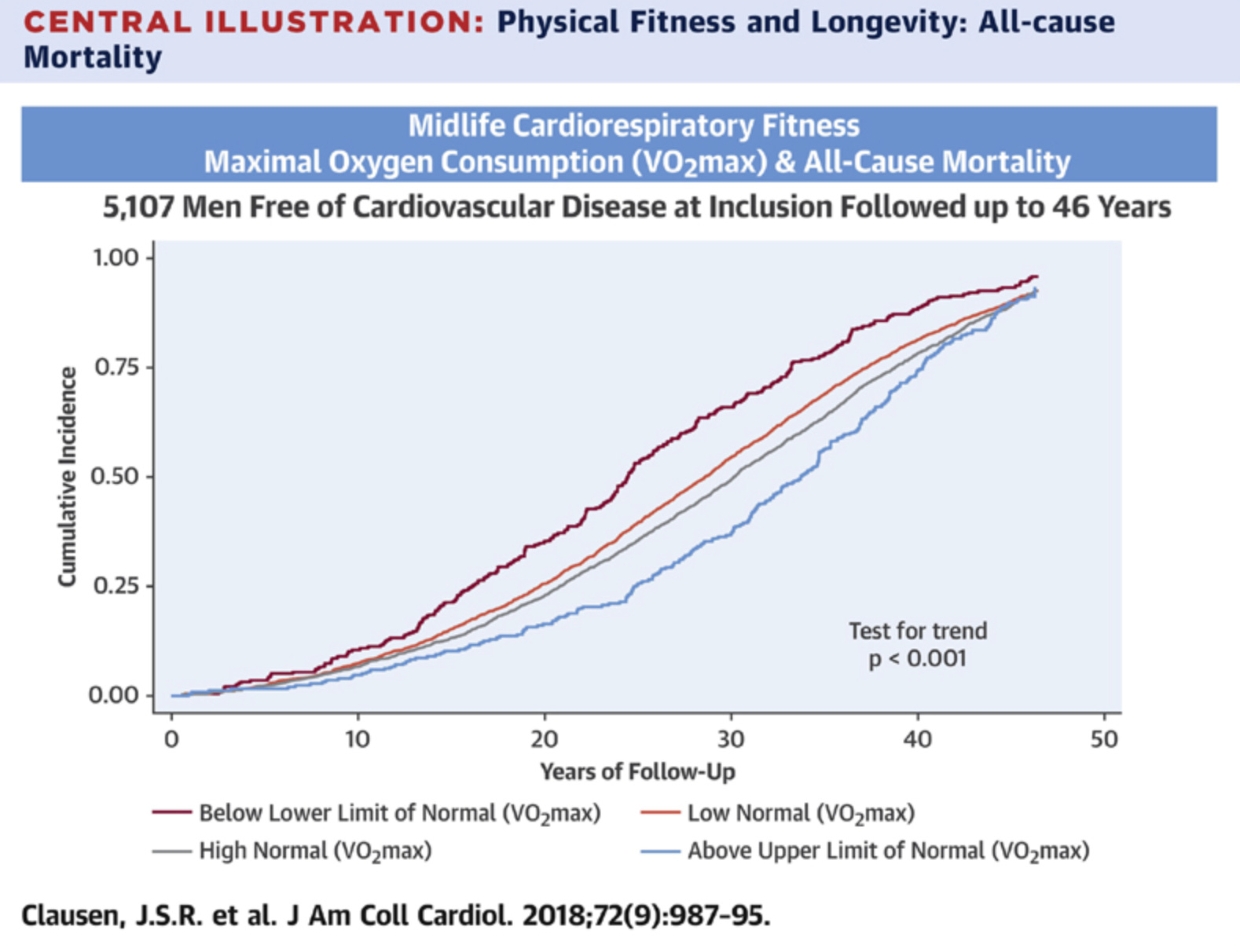
VO2 max — your body’s maximum capacity to consume and utilise oxygen during exercise — is the strongest single predictor of all-cause mortality in the research literature.
More predictive than blood pressure.
More predictive than cholesterol.
More predictive than blood sugar.
The research is direct: moving from the bottom quartile to above average VO2 max for your age reduces all-cause mortality risk by approximately 45%.
Moving from below average to elite reduces it by approximately 80%.
This is not a marginal finding.
It is the most consistent predictor of longevity that exercise physiology has produced.
What increases VO2 max: interval training at high intensity — 90–100% of maximum heart rate — for short bursts with recovery.
4 minutes on. 4 minutes recovery. Four rounds.
Once or twice per week.
This is the minimum effective dose the research supports for meaningful VO2 max improvement in adults over 50.
Research confirms VO2 max is the single strongest predictor of all-cause mortality — with elite VO2 max associated with approximately 80% reduction in mortality risk compared to low fitness. Verify the study → pubmed.ncbi.nlm.nih.gov/29727641
7 — Zone 2 cardio builds the engine VO2 max training runs on
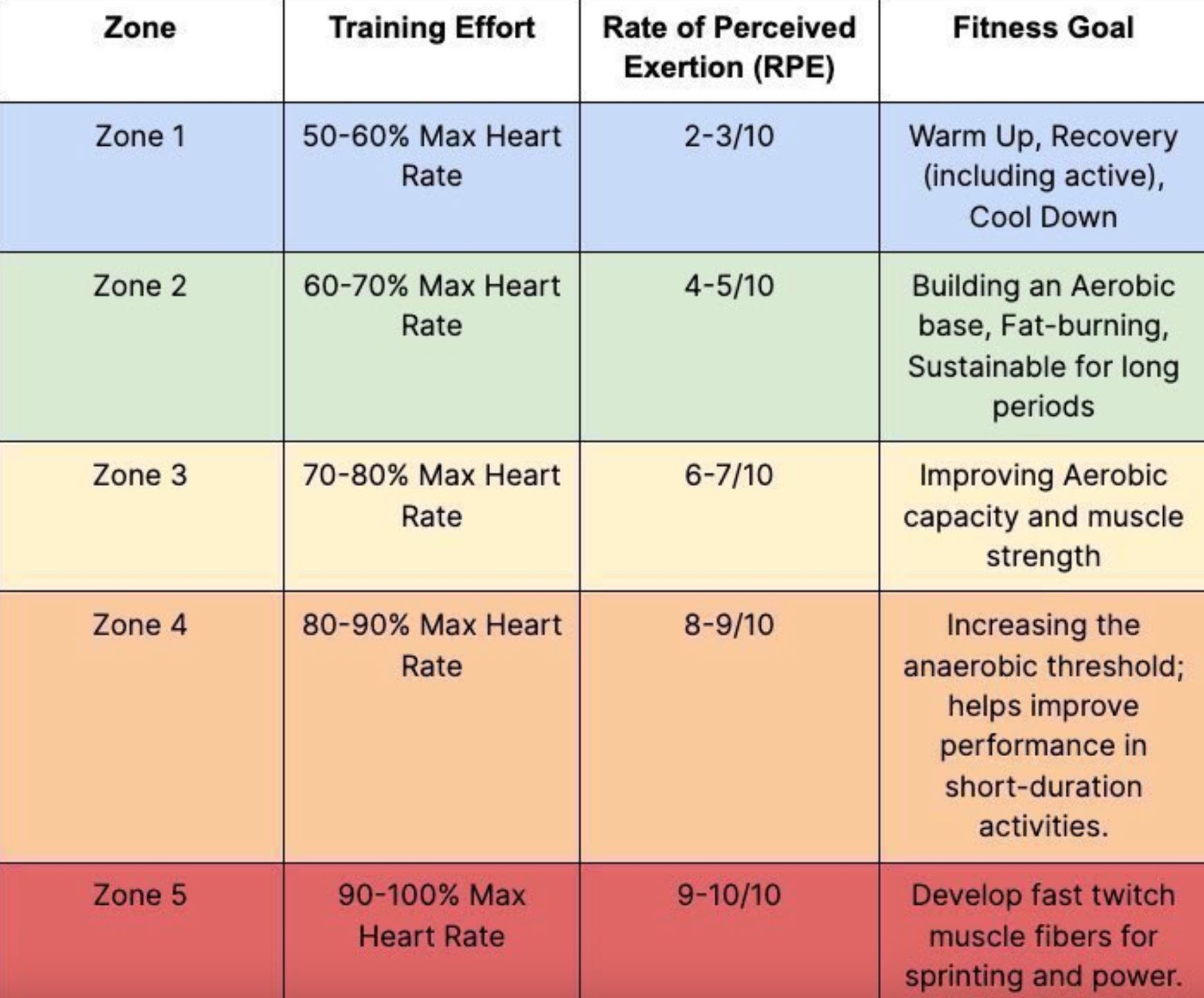
Zone 2 is low-intensity, sustainable aerobic exercise — effort level where you can hold a full conversation without significant difficulty.
Most people skip it because it feels too easy.
That is exactly why it works.
Zone 2 training builds mitochondrial density — the number of mitochondria in each muscle cell — which is the biological foundation of aerobic capacity, fat metabolism, and cardiovascular health.
More mitochondria means more efficient energy production.
More efficient energy production means:
→ Less fatigue during daily activities
→ Greater endurance capacity before exhaustion
→ More efficient fat burning at rest
→ Stronger cardiovascular system that is harder to overload
→ Direct protection against the heart disease that kills more adults over 50 than any other cause
Two to three sessions per week.
45–60 minutes each.
Brisk walking, cycling at comfortable pace, swimming, light jogging where you can still talk.
Zone 2 is what allows you to train for decades without burnout, injury, or the cortisol accumulation that excessive high-intensity training produces.
It is the engine.
VO2 max training is the ceiling of that engine.
You need both.
8 — Walk every day. It is the simplest and least respected rule on this list.
End here — because the most important rule is the one that requires the least explanation and gets the least consistent application.
Walking every day.
Not as a workout.
Not as a supplement to real exercise.
As a non-negotiable daily behaviour — as fundamental as eating and sleeping — that produces compounding biological benefits with zero downside and zero cost.
Walking:
→ Reduces all-cause mortality risk measurably at 8,000 steps daily — independent of other exercise
→ Improves glucose metabolism after meals — reducing the post-meal insulin spike that drives visceral fat storage
→ Activates the parasympathetic nervous system — directly lowering baseline cortisol → Maintains the joint mobility and functional capacity that seated work progressively erodes
→ Provides the low-intensity aerobic base that supports everything else on this list
The minimum: every day.
Don’t sit for 10 continuous hours.
Do it even when you don’t feel like it.
Particularly when you don’t feel like it.
It is the simplest habit on this list.
It is the one most people fail to maintain.
And it is the one that, applied daily for years, produces the most measurable long-term reduction in all-cause mortality of any single behaviour on this list.
─────────────────────────────
THE CONNECTING INSIGHT
Eight rules.
Most people look at this list and see complexity.
Attia sees a system — and the system has a logic.
Sleep is the foundation. Without it — training breaks you rather than builds you.
Nutrition is the fuel. Without it — muscle cannot be built or maintained.
Walking is the baseline. Without it — every other movement intervention sits on a sedentary foundation.
Zone 2 builds the aerobic engine. VO2 max raises its ceiling.
Resistance training builds the metabolic organ that regulates everything.
Brain training is the benefit that makes all the physical work meaningful.
And training for the final decade is the reason that gives every session its purpose.
Each rule supports every other rule.
Remove one and the system weakens.
Keep all eight — and the system compounds.
THE PART MOST PEOPLE MISS
These 8 rules are the framework.
What determines how they actually perform in your specific body is what your blood shows.
Your cortisol levels determine whether resistance training is building you or breaking you.
Your vitamin D determines whether your muscle cells can actually respond to the training stimulus.
Your fasting insulin determines whether your Zone 2 sessions are burning fat or running on glucose with no metabolic adaptation.
Your inflammatory markers determine whether the walking is producing the cardiovascular benefit the research documents — or whether systemic inflammation is blunting the adaptation.
The rules are the same for everyone.
The biology underneath them is not.
That is exactly what Blood•Print reads.
Your blood. Your markers. Your plan — built around what your body specifically shows.
Not Attia’s protocol applied generically.
Your version of it — adjusted to the hormonal and metabolic environment your bloodwork reveals.
ONE QUESTION BEFORE YOU READ THE PROTOCOL
Which of these 8 rules feels most out of reach for you right now?
Is it the sleep — because something is keeping cortisol elevated and preventing restoration?
Is it the nutrition structure — because the hunger and cravings feel beyond willpower?
Is it the training — because the energy isn’t there to do the work even when the intention is?
Reply to this post and tell me.
Or send me a direct message.
